Fizz
Lead Product Designer (Contract) · Feb 2023 - Nov 2023
Skills used: Product design, UI/UX, Branding, User research, Prototyping, Mentoring | URL: fizz.social
Examples: Figma
Press: TechCrunch — Fizz, the anonymous Gen Z social app, adds a marketplace for college students
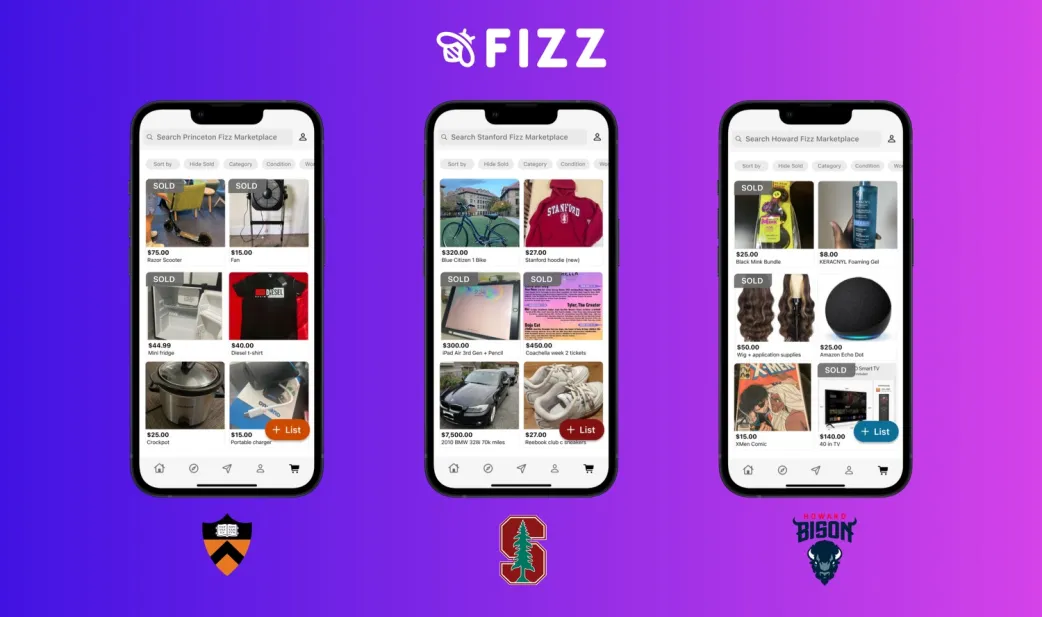
As the product designer for Fizz, I was tasked with designing a seamless and intuitive platform for college students to buy and sell items within their campus communities. Drawing inspiration from Fizz's mission to create safe, student-focused spaces, I focused on simplifying the user experience while aligning with Gen Z preferences for mobile-first and minimalistic interfaces.
The strategic context mattered here. Fizz had strong engagement as an anonymous campus social network but needed durable reasons for students to return, and commerce is one of the few behaviors that reliably brings people back without depending on novelty. Building a marketplace also meant entering a category dominated by Facebook Marketplace and Craigslist, so competing on breadth was never realistic. The advantage was the campus boundary itself: a buyer and seller who attend the same school, can meet at a known place on campus, and share real social context.
I came in as a contract lead, which meant establishing direction quickly and leaving the team with something they could extend after I rolled off. Alongside the design work I mentored designers on the team and documented the patterns behind decisions, since a marketplace accumulates edge cases indefinitely and the team needed the reasoning, not just the screens.
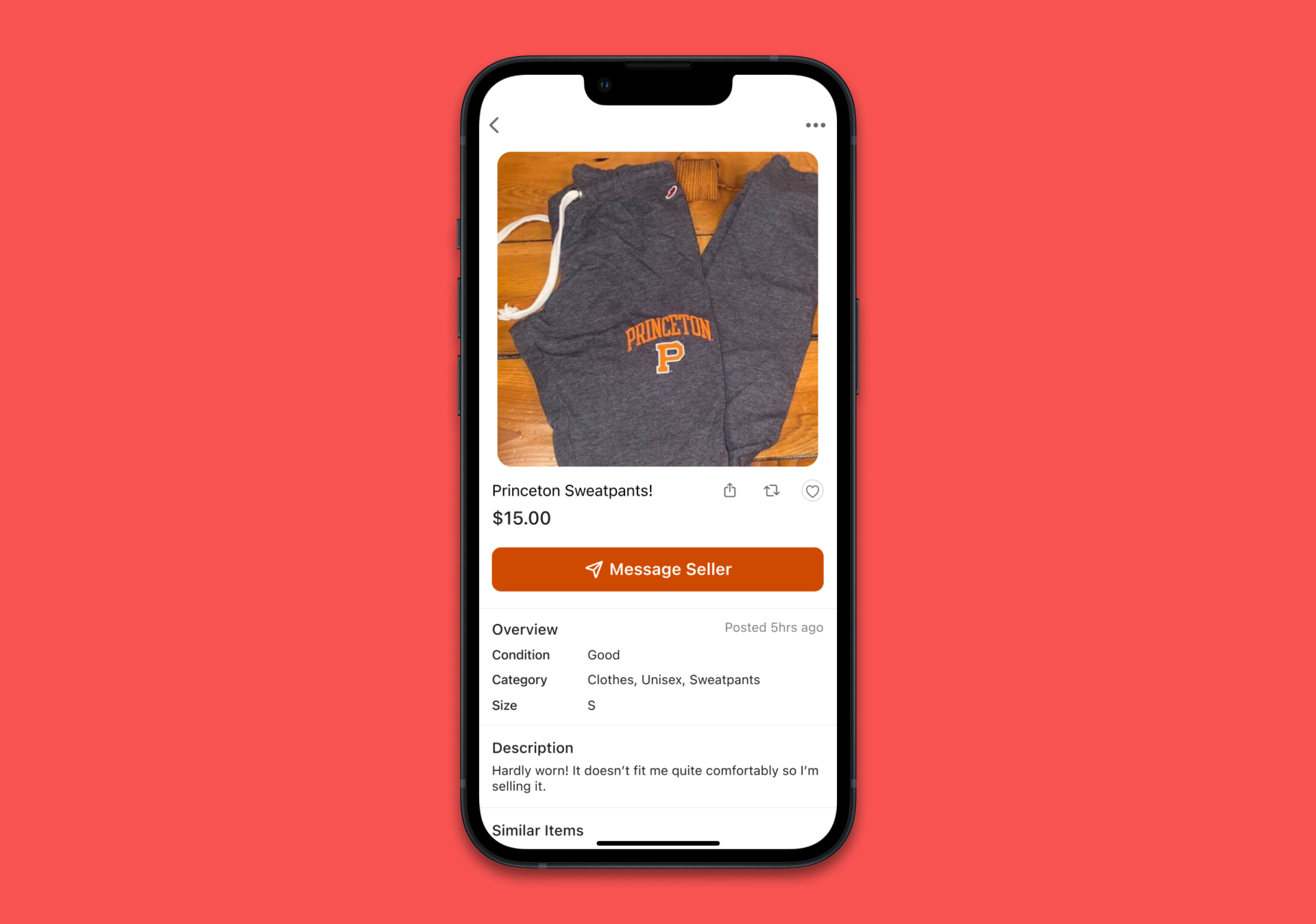
A streamlined browsing experience
Leveraging Fizz's existing infrastructure, I conceptualized and designed the marketplace feature, integrating core functionalities like browsing, listing, and messaging. My designs emphasized accessibility, ensuring that even first-time users could easily navigate the platform to list items such as clothing, textbooks, and bikes. Special attention was given to fostering trust among users, a challenge inherent to anonymous platforms, by designing clear and consistent UI elements that highlight proximity and shared community affiliation.
The central design problem was that anonymity and commerce pull in opposite directions. Fizz's social product worked precisely because students could post without attaching their name, but nobody wants to send money to a stranger with no identity. Rather than forcing users to abandon anonymity, I looked for the minimum disclosure that makes a transaction feel safe, and concluded it was verified campus affiliation plus proximity rather than a full identity. Knowing a seller is a verified student at your school, a short walk away, does most of the work that a profile photo and real name would do elsewhere.
The other constraint was listing friction. Students are selling a used textbook worth twenty dollars, so a listing flow that takes several minutes simply will not get used, and without supply the marketplace never starts. I designed listing to be completable in a handful of taps with photos doing most of the work, and deliberately kept optional fields optional. Getting the seller side effortless mattered more than making the browsing experience sophisticated, because supply is the harder side of a marketplace to bootstrap.
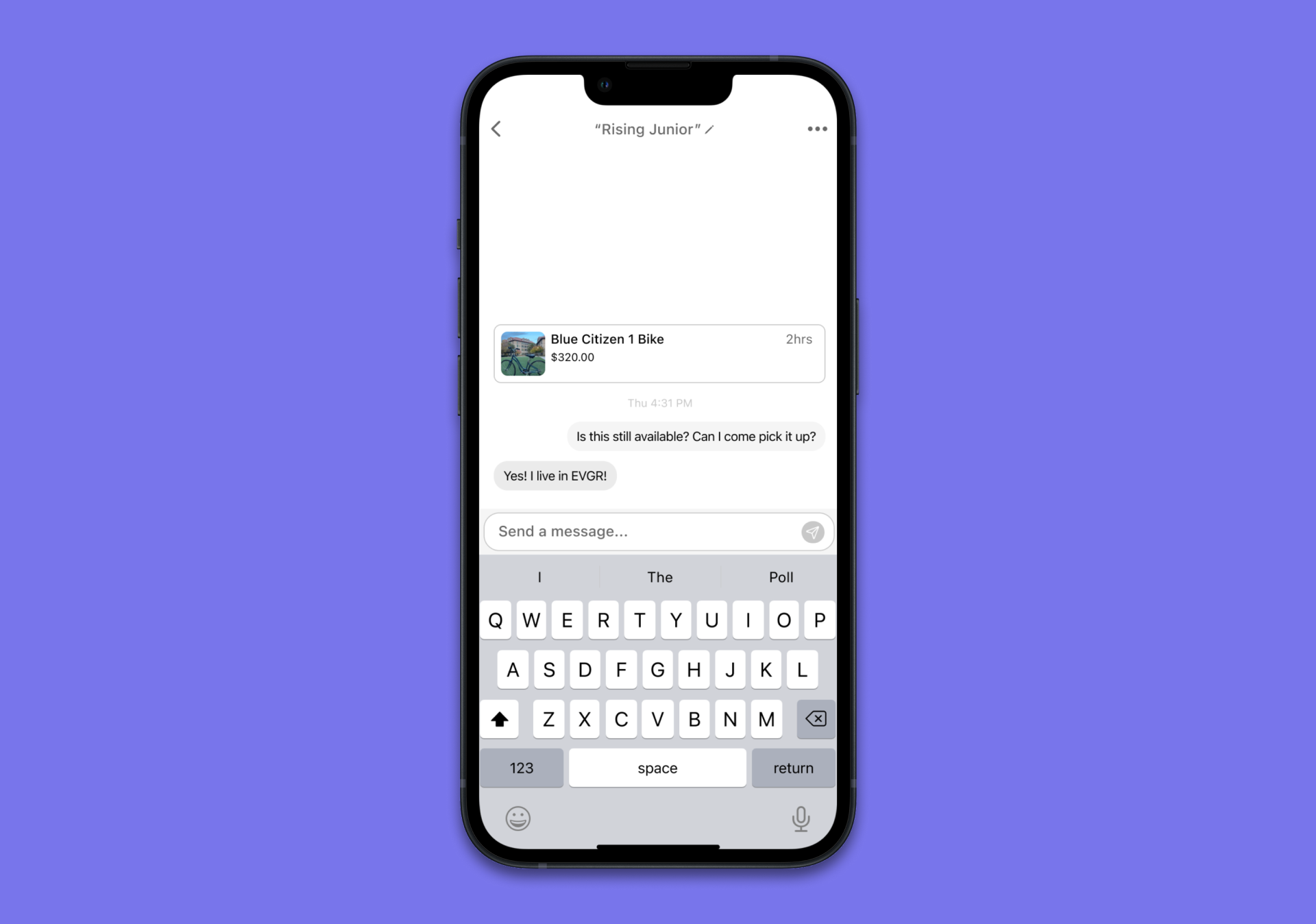
Messaging integration for effortless negotiation and coordination
Messaging was the piece most likely to be underestimated. In a campus marketplace the conversation is not a support channel, it is the transaction: negotiating a price, agreeing on a dorm or library to meet at, and confirming someone actually showed up. I designed it to carry the context of the listing directly into the thread so neither person has to restate what they are discussing, and so a seller juggling several interested buyers can tell conversations apart at a glance.
The Fizz Marketplace has garnered significant engagement, with over 50,000 listings posted and 150,000 direct messages exchanged within the first few months of its launch. This reflects the success of a user-centric design approach that blends functionality with the community-driven ethos of Fizz.
The ratio between those two numbers is the part I find most telling. Roughly three messages per listing indicates conversations were actually converting into coordination rather than stalling, which was the real risk with an anonymous buyer and seller. It suggested the trust signals were doing their job, since students were willing to move from browsing to arranging to meet someone in person.
My work on this project builds on my prior experience with Lime, where I championed user advocacy and cross-functional collaboration to design impactful solutions. From introducing innovative product features to refining existing workflows, my design philosophy remains rooted in understanding user needs and delivering exceptional digital experiences.
